"The keys that protect your identity, your assets, and your nation's secrets must be unbreakable by any computer — classical or quantum. Secure tomorrow, today with PALLAS."— Pilon Laboratories Inc.
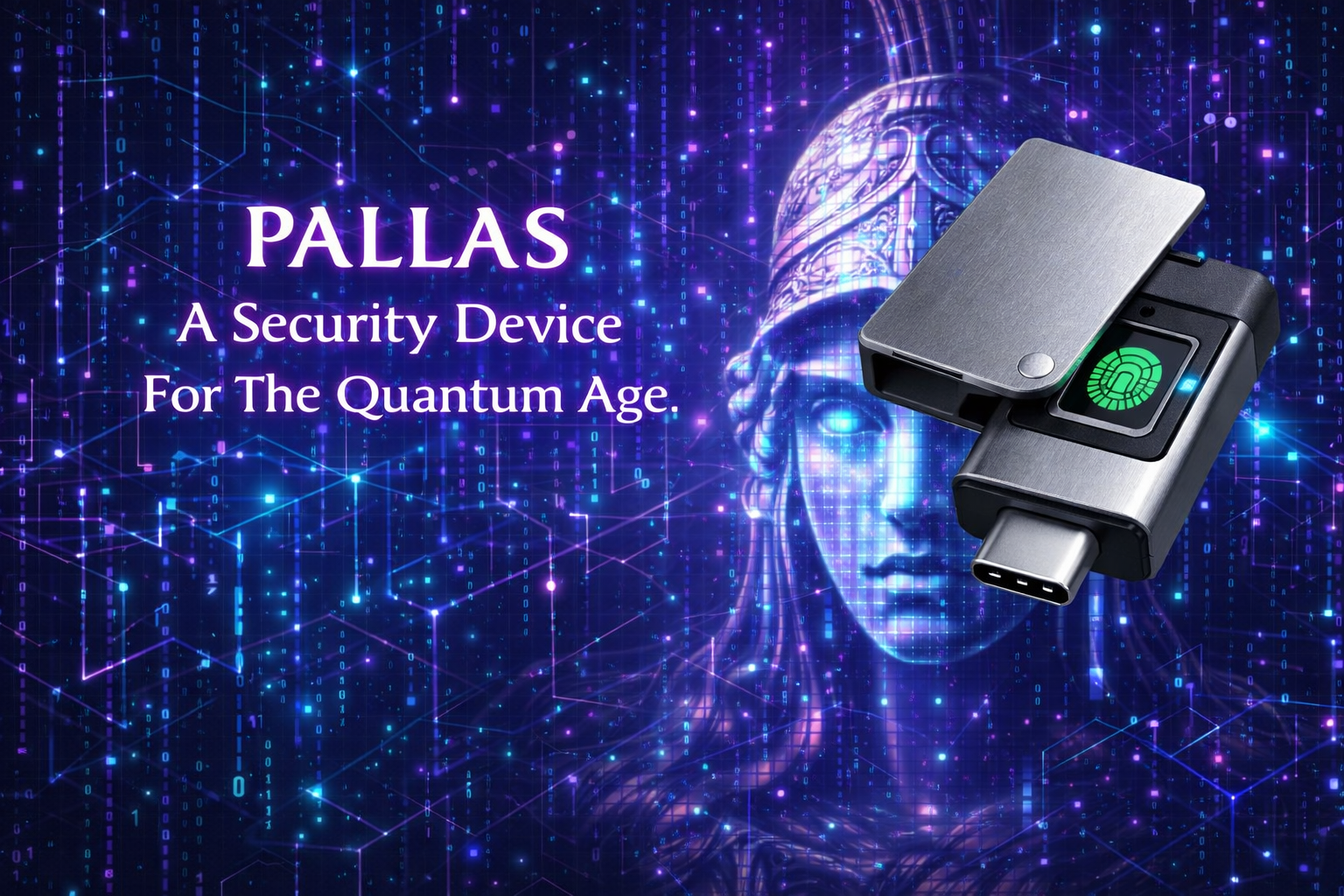
Security built for tomorrow's threat landscape
Pilon Laboratories Inc. was founded in Nova Scotia, Canada, with a single thesis: that the transition to post-quantum cryptography will define the security posture of every government, enterprise, and individual for the next century — and that transition needs purpose-built hardware, not software patches on keys designed for a pre-quantum world.
PALLAS was born from the intersection of three disciplines — quantum physics, embedded systems engineering, and cryptographic protocol design. We combined a true quantum random number generator, a certified secure element, and the NIST FIPS 204 post-quantum signature standard into the world's first hardware security key that doesn't just resist today's threats — it resists tomorrow's.
PALLAS is three products in one: a post-quantum FIDO2 security key that replaces every password you own, an encrypted offline data vault with up to 1TB of AES-256-GCM protected storage, and a quantum-secured hardware crypto wallet for the PALLAS Wallet App — supporting XInfinitum and major blockchain networks. Every function is protected by the same biometric-triggered, self-destructing quantum key architecture. One device. Three layers of security most products never reach individually.
We are a small, focused team working at the intersection of deep hardware and cutting-edge cryptography. We believe the best security products are built by people who understand the threat at a fundamental level — and who are unwilling to compromise.
Built from curiosity, conviction,
and an unconventional path
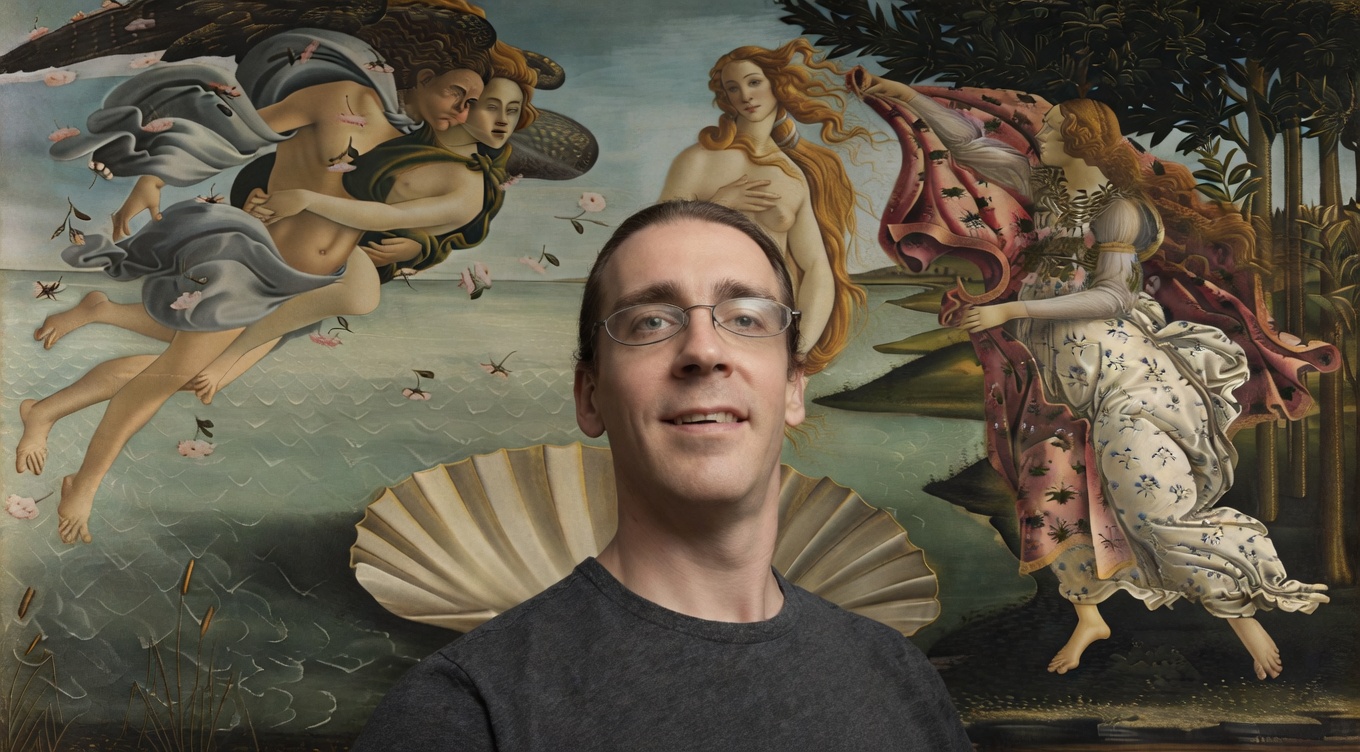
Derek Arsenault is the founder of Pilon Laboratories and the inventor of XInfinitum, the PALLAS device, the Quantum State Key, and the HXC Code — a suite of technologies he conceived and developed entirely through self-directed research and a lifelong refusal to accept the limits others placed on what he was supposed to know.
His love of physics began in high school, where it was his favourite subject and where he pursued it at the advanced level. It was there that he first encountered the strange and beautiful logic of how the universe actually works — a fascination that never left him. When he entered post-secondary education, however, the path narrowed. Enrolled in an arts degree at a large institution, he found himself feeling like a number rather than a person — adrift in a system that seemed designed to produce outcomes rather than to cultivate minds. His introverted nature made the experience feel smaller still, and the more honestly he examined it, the less he could reconcile the cost — financial, spiritual, social, educational — with what was being offered in return. A degree in the arts, he felt, was not going to answer the questions that mattered most to him. The deeper truth was that he didn't yet know who he was or what he wanted from life, and he believed those answers deserved to be found before he committed to a debt that might only deepen the uncertainty. So he left.
He went his own way, and it wasn't easy. But the path he chose — unconventional, self-directed, and entirely outside the prescribed route — forged the thinker he eventually became. He is not certain he would be standing where he stands today if he hadn't had the courage to walk it.
His return to physics deepened through a book. After reading Lynne McTaggart's The Field in 2008, he became absorbed in the study of quantum mechanics — following emerging research, engaging with primary literature, and drawing connections across disciplines that formal education rarely encourages. What began as rekindled curiosity evolved over nearly two decades into a working framework for post-quantum cryptographic architecture.
His philosophical foundations run equally deep. A lifelong student of Plato, Homer, and the broader Western philosophical tradition, Derek has long been preoccupied with one question above all others: what is money, and why does the current answer to that question concentrate power at the expense of individuals? That conviction — that decentralized, mathematically-sovereign currency is not just preferable but necessary — has been the animating force behind everything Pilon Laboratories is building.
Derek first entered the crypto space in 2016–2017 as an investor and active participant, watching the ecosystem mature while quietly developing his own ideas about where it needed to go. His professional background is in advertising and creative media, where he spent years as a social media manager and creative writer for national brands at an agency in Atlantic Canada. That background — equal parts strategic communication and storytelling — informs how he thinks about technology: not as an end in itself, but as a means of reshaping the relationship between people and systems of power.
It was not until the emergence of accessible artificial intelligence that Derek was able to begin building what had long existed only as vision. AI became the bridge between a lifetime of accumulated ideas and a coherent, executable plan — the collaborator that allowed a single, self-directed mind to design cryptographic systems, develop firmware, draft white papers, and architect a full technology stack without an institution behind him or a funded team in front of him. What AI made possible was not the ideas themselves — those had been forming for years — but the ability to act on them with precision and velocity.
That capability came to fruition in early 2026, when Derek formalized his independent research into a coherent business suite and business plan, filing his first patents and publishing his white paper in April 2026. He is currently seeking pre-seed or angel investment and assembling the core team that will bring XInfinitum, the PALLAS device, and the broader Pilon Laboratories ecosystem to testnet and beyond. He believes this moment — when individual inventors can finally build at the scale once reserved for well-resourced teams — is one of the most significant inflection points in the history of human creativity, and he intends to be proof of it.
He is passionate about film, gaming, the arts, and the intersection of culture and science — and believes the next generation of cryptographic infrastructure should be built by people who care about all of those things.
What we stand for
Physics-Grounded Security
True randomness from quantum hardware. Not pseudo-random software. Not a PRNG seeded from system time. Real entropy from the quantum world.
Zero Software Compromise
Private keys never leave the secure element. No amount of host compromise, OS vulnerability, or malware can extract what never exists outside hardware.
Biometric Without Fallback
There is no PIN that bypasses the fingerprint. There is no master password to phish. Your presence — alive, in person — is the only key.
Post-Quantum or Nothing
We will not ship a product that falls to Shor's algorithm. CRYSTALS-Dilithium5 — NIST Level 5 — is our standard. We built our entire architecture around it.
Founded & Incorporated
Pilon Laboratories Inc. incorporated federally in Canada. Research begun. Threat model defined. Hardware component selection completed. CRYSTALS-Dilithium5 selected as primary signature algorithm. Patent application filed. Business Number: 787442177.
Architecture & Firmware Development
Full firmware stack completed: cryptographic protocol design, key lifecycle (derive-then-destroy), SE mutual authentication, HAL, USB HID driver, FIDO2/CTAP2 stack, biometric pipeline, vault encryption, secure element driver.
Prototype Manufacturing
PCB fabrication, component assembly, enclosure machining, and initial firmware flashing. Target: 5–10 working prototypes.
Testing, Certification & Commercial Launch
Device validation testing, FIDO Alliance Level 1 certification submission, production run, and commercial launch. Planned delivery to pre-order customers. All timelines subject to change.
The window is closing
NIST finalized FIPS 204 (Dilithium) and FIPS 203 (Kyber) in August 2024 — the first post-quantum cryptographic standards in history. CISA and NSA have both issued mandates for federal agencies to begin post-quantum migration. The EU's ENISA has published similar guidance.
Nation-state adversaries are not waiting. "Harvest now, decrypt later" operations mean that data protected today by classical cryptography may be decryptable within the decade. Authentication tokens signed with ECDSA today can be forged tomorrow.
There is currently no commercially available hardware security key that implements post-quantum signatures. PALLAS will be the first. The market exists. The threat is real. The timing is right.
Proudly Canadian
Pilon Laboratories Inc. is federally incorporated in Canada and headquartered in Nova Scotia. We are actively pursuing NRC-IRAP support, ACOA Atlantic funding, and SR&ED tax credit programs to accelerate development. Government and defence procurement inquiries are handled through CanadaBuys / PSPC.
Canadian sovereignty over cryptographic infrastructure matters. We believe critical security hardware for government and defence applications should be designed, engineered, and manufactured in Canada.
Nova Scotia, Canada · Patent Pending